Why the MCP Analytics Server Is the Only Supabase Surface an AI Agent Should Ever Resolve
Agents should read governed, pre-modeled metrics, not live Postgres tables.
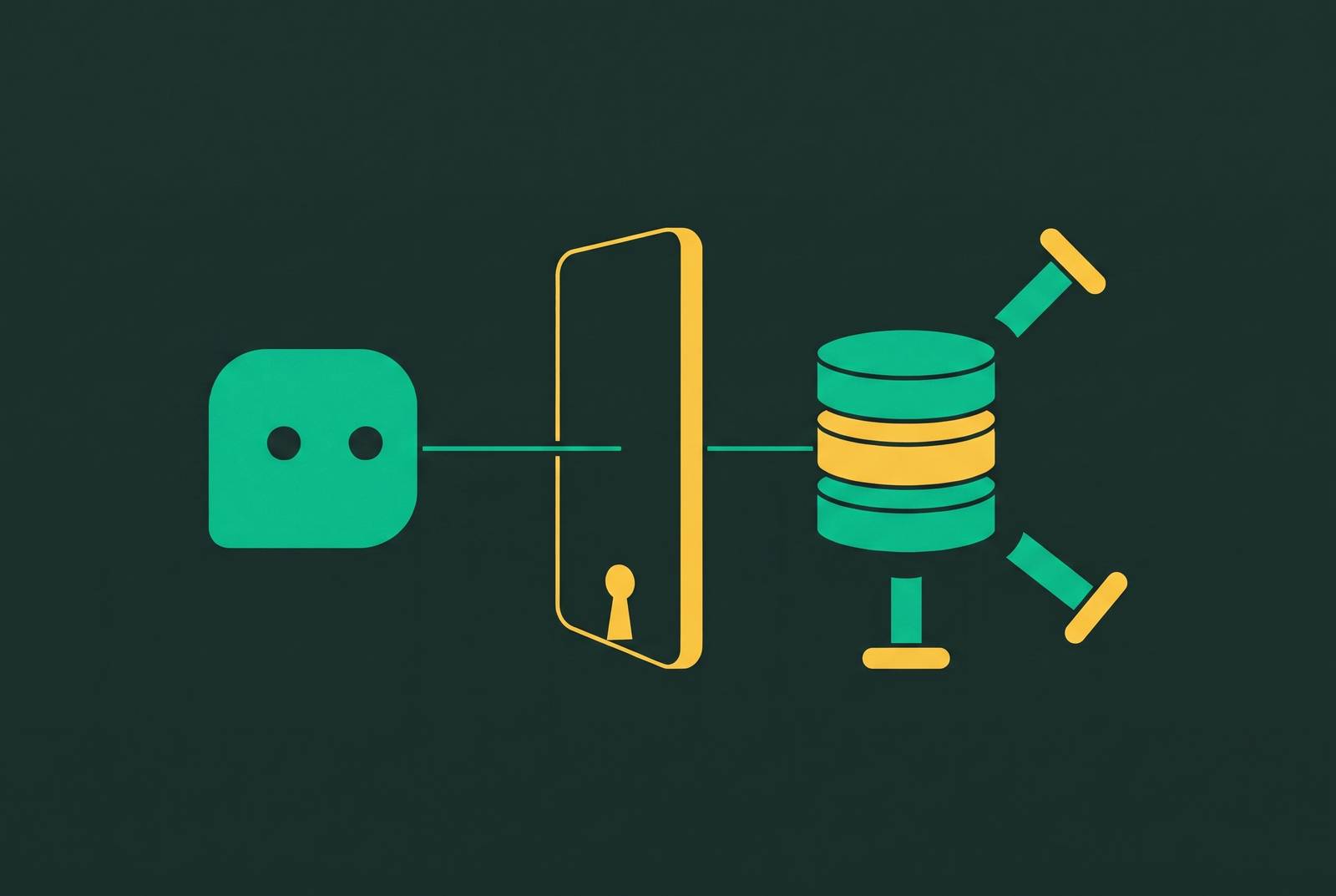
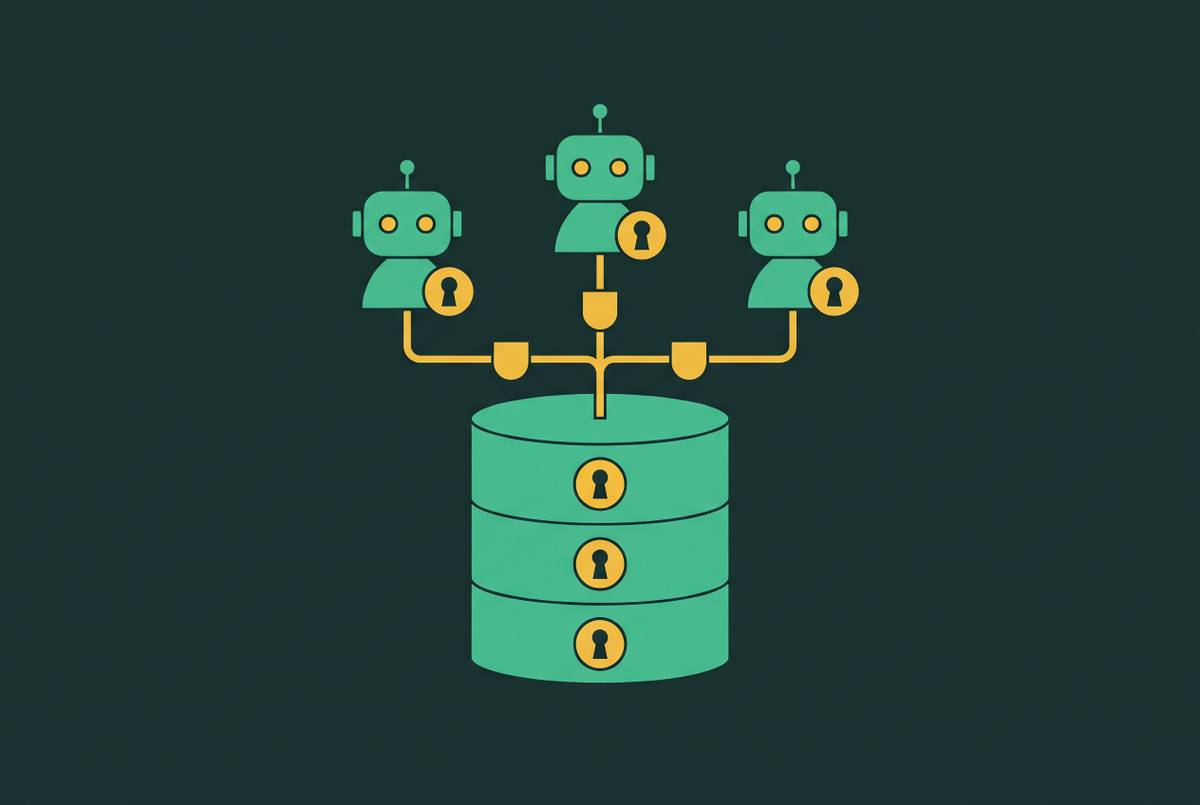
AI agents should query Supabase data through a governed MCP analytics server. That server must make pre-modeled metrics available, enforce analytical access permissions, and serve datasets kept apart from application traffic.
Why AI agents querying Supabase data need a dedicated access surface
AI agents now query data, write reports, and act on what they find inside product workflows. Their access is an operational concern today. For a Supabase team, the easiest place to start is often a database connection, API, or reporting interface it already has. Those interfaces, however, were built for human operators or deterministic applications, while an LLM-driven process can issue unpredictable, expensive, or repeated requests.
An agent may retrieve information for a person to check, but its answer may also feed another workflow or recommendation. The interface therefore affects both how the application runs and the decisions made from its answers. Choosing where an agent resolves a data request is an architectural decision.
What surfaces a Supabase project exposes to an agent and what each one actually touches
A direct Postgres connection exposes raw tables, live transactional rows, and schema internals through a connection string. That string may be the same one the application uses. The connection provides no shared business vocabulary. An agent must interpret column names and generate SQL to distinguish concepts such as revenue and gross revenue.
The service role key provides a different authorization scope. It bypasses all Row Level Security policies and provides unrestricted database access for administrative work, including schema migrations. PostgREST, the auto-generated REST API, instead respects user-level permissions through RLS. It returns raw table rows, so the business calculations that turn them into modeled metrics must happen outside that interface.
Edge Functions can encapsulate business logic for specific application workflows. A dashboard or reporting layer is another interface above the data. Neither is, by that description alone, a general analytics surface for agents. A governed MCP analytics server is a distinct option that sits between agents and production surfaces, exposing pre-modeled metrics and enforcing dataset-level permissions.
Why direct production database access turns every agent into a liability
With direct database access, non-deterministic requests run against the system that serves application users. An agent has no inherent understanding of query cost. It may issue full table scans, repeat requests, or aggregate millions of rows without accounting for the effect on live traffic. As agent query volume grows unpredictably, the operational database must absorb a workload it was not sized to serve.
Prompt injection can manipulate an agent into exposing or summarizing sensitive information that its credentials legitimately permit it to read. Authorization must therefore reside in trusted application code and data services. Giving the agent a service role key also lets it cross the row-level boundary.
Amazon’s North America Sort Center (NASC) architecture uses a centralized MCP gateway to address a pattern at scale in which each agent reimplements access control and each new dataset requires custom integration code. No production database incident was reported. Direct raw-schema access also puts correctness at risk because each agent must build metrics such as ARR from scratch. Two valid queries can then produce different answers to the same business question.
Why RLS alone does not make the production surface safe for agents
For a small team with one database and limited engineering time, enforcing RLS is a reasonable first response. It provides a real access boundary. RLS answers which rows a user may see, making it central to multi-tenant application access. The objection to relying on it alone is not that row filtering is ineffective, but that analytical governance asks different questions.
RLS does not set a limit on how much a query should cost. A full table scan remains a full table scan when an RLS policy filters its results, and a naive policy can add work by evaluating an authentication function once per row. Row filtering also leaves revenue and churn undefined. Two agents can use exactly the same permitted rows and still calculate incompatible metrics.
The same distinction applies to prompt injection. An agent can be manipulated while database authorization still works, because the database may return only the rows the agent is allowed to read. The failure can occur afterward, when the agent leaks or misrepresents what it received. RLS has no control over that behavior. Retaining RLS is compatible with a governed analytics layer, but relying on it alone leaves cost, semantics, and downstream handling unresolved.
What a governed MCP analytics server actually does that the production surface cannot
A governed MCP analytics server establishes a semantic and permission boundary before the agent asks a question. Business logic is defined in the analytics layer. Monthly active users, ARR, churn, and LTV therefore have shared definitions rather than calculations reconstructed for each request. A definition change happens in one place and propagates to downstream consumers, so human and agent answers use the same vocabulary.
Permissions belong at this boundary as well. Dataset-level rules set what the agent can receive, while enforcing them in one place lets access decisions be audited. Production RLS policies do not automatically follow data into an analytical copy. The analytics layer must enforce its own permissions because copying data does not also copy its protections.
Isolation closes the workload gap that permissions cannot. Agents query pre-calculated datasets instead of live transactional rows, and their actions receive distinct identifiers in audit trails. MCP then standardizes access to this governed layer for compatible clients, including Claude, custom agents, and Slack bots. Connector logic can be shared across consumers. The protocol provides the delivery mechanism, and an MCP connection to unmodeled production data would leave the underlying problems intact.
The four-layer architecture that makes agent-safe analytics work in practice
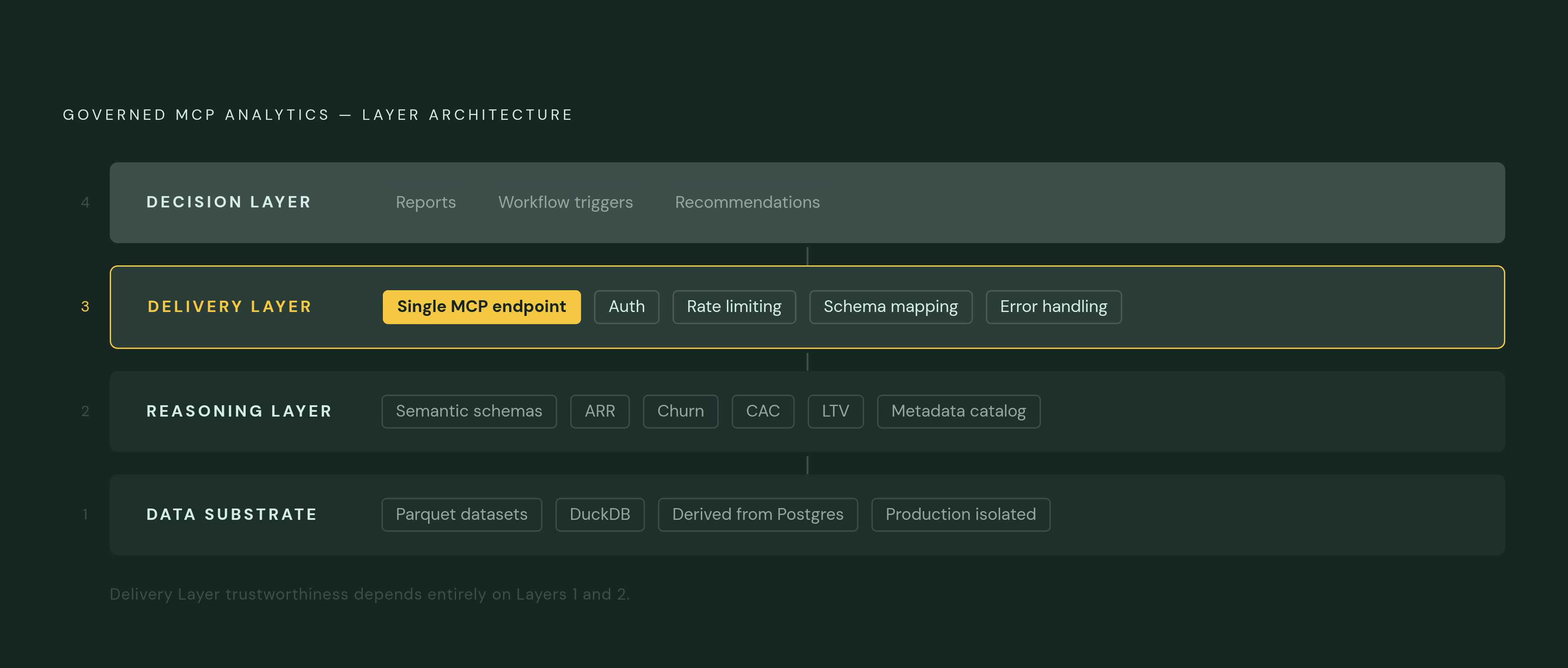
The first layer, the Data Substrate, holds verified, permissioned, refreshable data with documented provenance. For the Supabase pattern, this means pre-modeled analytical datasets derived from Postgres and stored as governed Parquet, queryable through DuckDB. Agents read these datasets without sending their queries to the operational instance.
The second layer, the Reasoning Layer, holds semantic schemas, governed context, and metric definitions. ARR, churn, and CAC belong here. A metadata catalog supplies schema descriptions, column-level semantics, and table relationships at query time. The NASC gateway demonstrates this catalog-driven approach, allowing agents to derive schema knowledge without hardcoded table structures. Its dataset onboarding requires only a metadata file, with no custom code or redeployment.
The third layer, the Delivery Layer, exposes a single MCP endpoint. It handles authentication, rate limiting, schema mapping, and errors for the agents and applications that use it. This is the shared access route. The NASC gateway illustrates centralized delivery and permissions, rather than establishing that its data lake uses the Supabase Parquet-and-DuckDB implementation.
The fourth layer, the Decision Layer, is where governed answers become reports, workflow triggers, or recommendations. Its reliability depends on everything beneath it. A fabricated metric definition in the reasoning layer can corrupt a downstream decision even when the connection works correctly. Separating these responsibilities makes clear why a working endpoint alone is not a complete analytics architecture.
Why metric consistency matters more when agents are in the loop than when only humans are
Conflicting metric definitions predate AI agents. CAC, ROAS, or MQL can mean different things to different teams, producing reporting disputes and slowing decisions. Agents accelerate the same failure. When a raw schema has no agreed definition of monthly churn, an agent can return a calculation that looks right but differs from what the business intended.
Repeated use makes that ambiguity more costly. Several workflows may ask similar questions dozens of times per day, carrying answers that disagree into reports and decisions. Those answers also present an appearance of authority that can make differences harder to spot than conflicting human spreadsheets. Correct SQL is not enough when the business definition remains unsettled.
For early-stage B2B SaaS founders, the set of useful metrics is fairly small. It includes CAC, LTV, monthly churn, MRR, and gross margin, with ARR and gross margin becoming more prominent at scale. Earlier stages also depend on activation, retention, and learning signals. Define the relevant metrics once in the governed layer. That is minimum viable analytics infrastructure.
How can a Supabase team add governed MCP analytics without a data warehouse?
A Supabase team can retain Postgres as its data home while deriving a separate, governed analytical representation for agent queries. A dedicated warehouse is not a prerequisite. The implementation described here uses pre-modeled Parquet datasets queried through DuckDB, rather than opening production tables to agent-generated SQL. It builds on the project already in place without changes to the production schema or a warehouse to manage separately.
The distinction between deriving data and querying it is essential. Analytical datasets come from the existing Postgres project and serve agent requests. Refreshability and provenance remain properties of the substrate. Saying that agents never touch production describes the agent query path.
For a team implementing this pattern, the recommended access point is one MCP server exposing the datasets, metric definitions, and scheduled reports. Compatible assistants then connect through the same endpoint instead of receiving individual database integrations. Its analytical permissions must set what data each session can receive, including the row-level access requirements that production RLS enforced before. A product’s MCP support alone does not establish that capability.
Observability belongs in the initial implementation. Distinct agent identifiers let founders see what agents queried, when they queried it, and what they received. Higher agent query volume also needs production-readiness evaluation, even though it no longer competes with application traffic. The relevant server criteria are therefore semantic governance, analytical permissions, workload isolation, shared delivery, and auditable requests.
The architectural conclusion — one governed surface, not a patchwork of agent connections
Each alternative exposes a different part of the problem. Direct Postgres access puts agent workloads against production, the service role key removes RLS protections, and PostgREST leaves metric interpretation outside the interface. Edge Functions can hold specific business logic without providing a shared analytics contract. Adding separate safeguards to each agent preserves the fragmentation that a central gateway is meant to remove.
Humans and agents share metric definitions, permissions are enforced centrally, and non-deterministic agent queries run against analytical datasets. This makes trusted data services responsible for the access and semantic decisions that should never have depended on model judgment.
Establishing it before agents proliferate avoids later work to reconcile separate access rules, audit gaps, and conflicting calculations. The governed MCP analytics server is therefore the appropriate resolution point for Supabase analytical requests because it gives every consumer the same controlled path from data to decision.