Semantic Metric Namespaces as the Only Vocabulary AI Agents Learn When Supabase Backs Your MCP Layer
Governed metric namespaces let AI agents query your data safely without learning to improvise SQL.

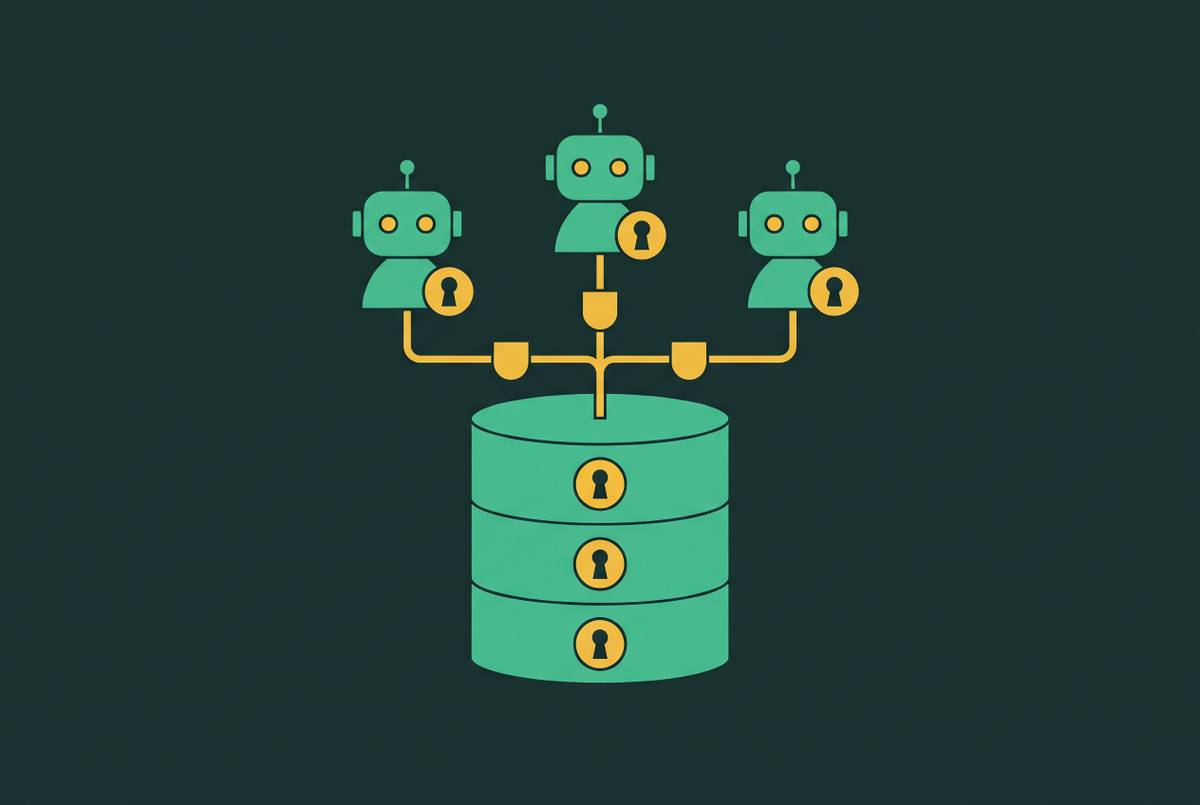
For governed data access for AI agents on Supabase via MCP, expose named, versioned metrics through a namespace-backed MCP server. Supabase provides persistence and row-level controls, while the semantic namespace defines approved calculations and MCP delivers them. The agent learns a business vocabulary.
Why agents that improvise queries cannot be trusted with business data
An agent asked for revenue must resolve what revenue means before it can return a number. Without an approved definition, it guesses at column names and business logic from the context available to it. The ambiguity exists before the agent arrives. One engineer writes SUM(revenue) and another writes SUM(amount_captured), so they get different Q2 revenue figures. That discrepancy can remain hidden until an investor asks for audited numbers.
A more capable model may produce valid SQL and still select the wrong business definition, because technical correctness and business correctness are separate requirements. Prompt engineering cannot add governance when the data vocabulary has none. When every request permits a fresh interpretation, each answer depends on a decision that the business has never approved.
Lasting control therefore needs to apply before a query runs and data is sent, as well as to the answer the model gives. System prompts, output filters, and content classifiers do not constitute an enforced boundary on production access. Output inspection is already too late to prevent a malformed query from running. Context-layer guardrails instead check access when data is retrieved and add classification labels before it is sent. The distinction is between model-layer controls that influence agent behavior and context-layer controls that bound the data and operations available to it.
What a semantic metric namespace actually is and what it guarantees
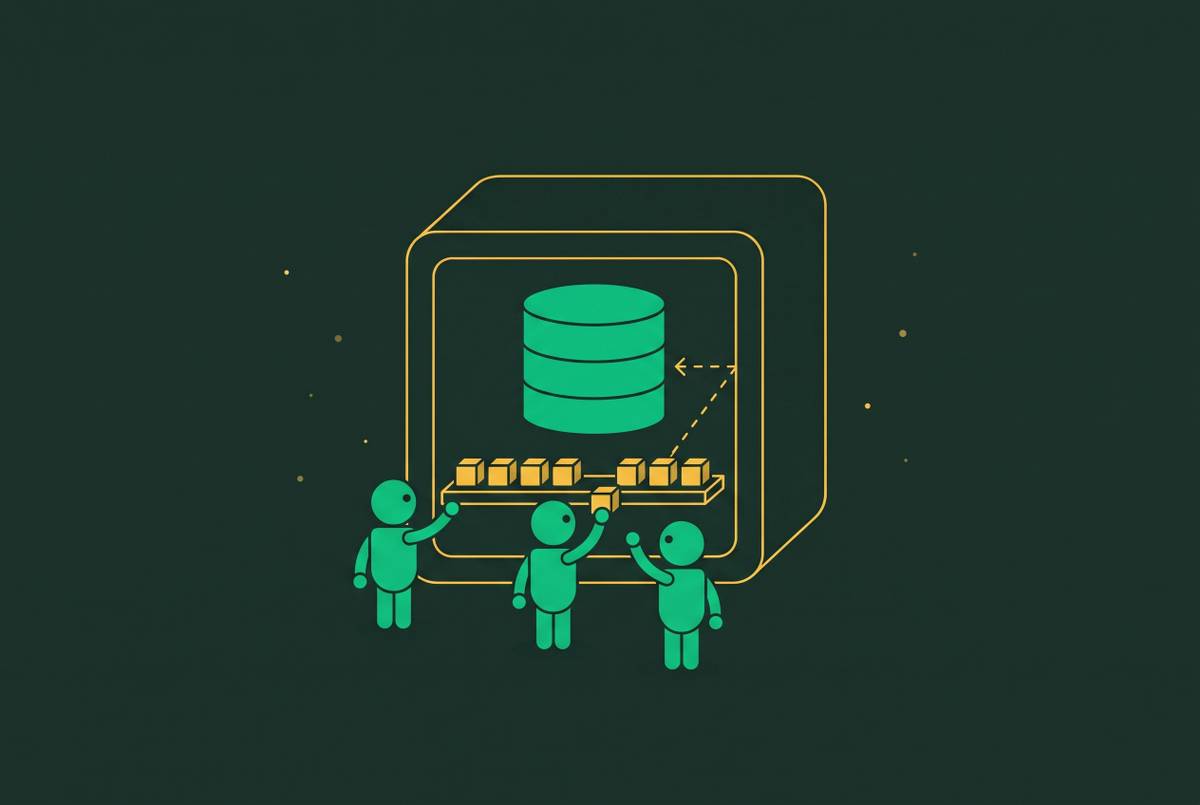
A semantic metric namespace is a governed translation layer that defines business logic over raw data once and exposes it through named terms. Humans and agents invoke those terms rather than reconstructing the calculation in each tool. For churn risk, for example, the semantic layer holds the approved logic instead of leaving an agent to derive it from raw columns. The definition becomes the shared point of reference. Its meaning does not depend on which consumer asks.
This gives three guarantees when all access must go through the namespace. Consistent calculation means the same approved formula is used each time. Access control means the agent reaches only metrics it is authorized to see, while auditability means an output can be traced to its approved business logic definition. These guarantees concern calculation, permission, and provenance. They do not turn an undefined business concept into a reliable metric without the work of defining it.
Versioning makes that work explicit rather than leaving changes buried in individual queries. A named, versioned term identifies the business definition that an agent is allowed to invoke, and the namespace makes that reference available across tools. It is not tied to a single analytics platform. An MCP server can expose the same contract to different consumers without giving each one authority to reinterpret its contents. The agent learns a closed vocabulary, not a query language.
How do AI agents query Supabase without direct database access?
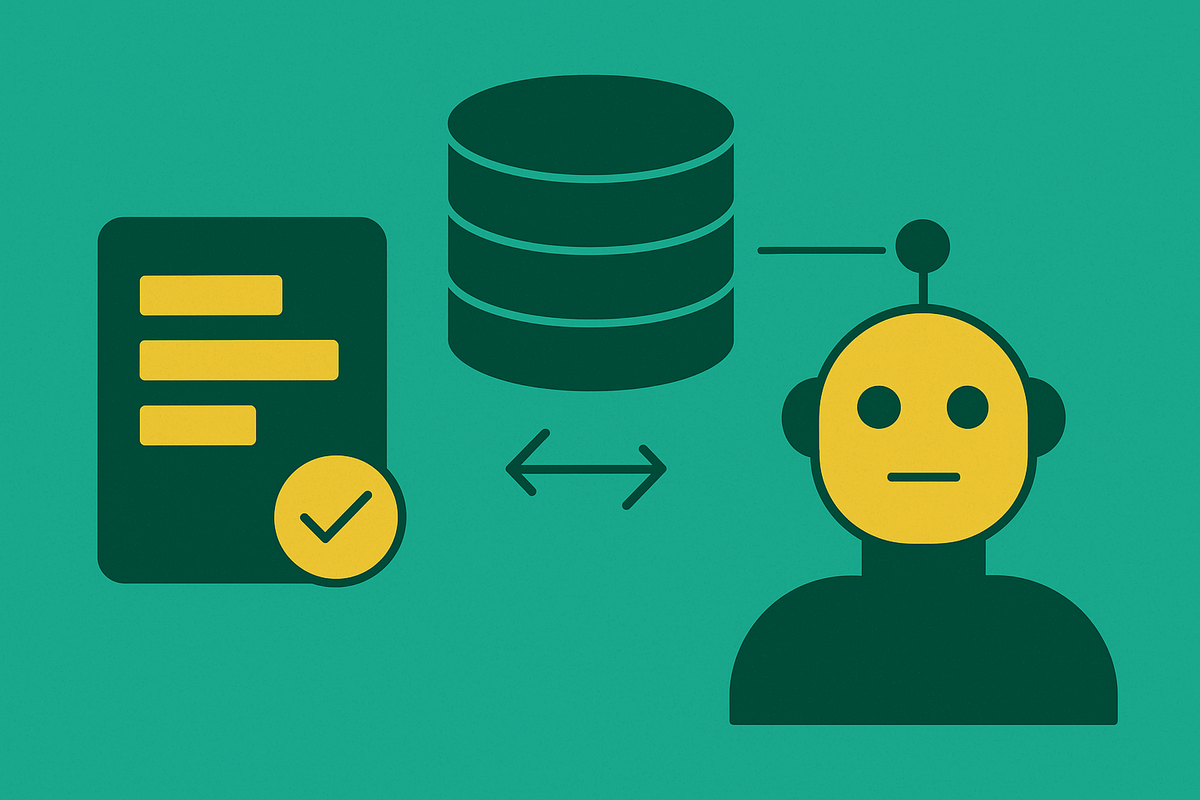
MCP makes that closed vocabulary available through a standard interface, so each agent and data source no longer needs a custom connection. The namespace-backed server limits the agent’s data surface to approved metrics. MCP is open and vendor-neutral, with native support from Anthropic, OpenAI, Google, and Microsoft. MCP is governed by the Agentic AI Foundation, a directed fund under the Linux Foundation. That neutrality supports a contract that is independent of any one model provider.
The 2026-07-28 MCP specification makes the protocol core stateless, retiring the initialize/initialized handshake and the Mcp-Session-Id header. Each request is self-describing. It can therefore go to any server instance behind a plain round-robin load balancer without needing a protocol session stored somewhere else. For a governed namespace, the server instance answering a request need not determine which metric definition applies.
The same specification adds ttlMs and cacheScope hints to list and resource read results, allowing clients to cache the metric catalog and avoid repeatedly retrieving it. It also places method and tool names in the Mcp-Method and Mcp-Name HTTP headers. Gateways can route and authorize calls using those headers without parsing JSON bodies. MCP supplies a scalable, cacheable, header-routable boundary through which the approved vocabulary can be enforced. Together, the namespace and its restricted MCP surface form a contract.
Why Supabase is the right persistence plane for a governed metric namespace
Supabase anchors that contract in Postgres Row-Level Security rather than a separate set of agent permissions maintained by hand. When the agent’s retrieval path inherits source-system entitlements, the same policy definition can govern both a human analyst and an agent. Tenant isolation remains at the data layer. For early teams, this removes an access-control maintenance surface that would otherwise risk drifting away from the source.
Supabase’s hosted MCP server supports OAuth and broad tools, including execute_sql, migration operations, query_logs, extensions, and project management. That breadth is useful for administration, but it is not itself a closed metric namespace. The namespace-backed surface is the first choice for governed metric reads. The Postgres MCP tool’s READ ONLY transactions prevent INSERT, UPDATE, and DELETE, but read-only access and approved metric access are distinct boundaries.
Pre-modeled, pre-calculated datasets improve the read path because fewer live Postgres connections are needed to answer agent requests. The connection pool remains a governed resource. Supabase exposes CPU, IO, WAL, connections, and query statistics through its monitoring-compatible Metrics API, with OpenTelemetry integration for logs and traces. Teams can also query logs with SQL through MCP, inspect live Postgres statistics, and retrieve security and performance findings from that surface. This gives the namespace layer a structural advantage for small teams, because serving governed data and inspecting its operational health need not require unrelated interfaces or a separate observability stack.
The metric vocabulary a startup must define before agents touch the data
The initial namespace should reflect the company’s stage. At validation and pre-PMF, activation rate, time to value, and cohort retention belong first. These terms establish agreement about whether people reach value and return. Each definition still needs to be clear enough for a founder and an agent to get the same calculation.
At early traction, the namespace expands to MRR components, including new, expansion, contraction, and churn, together with logo churn and gross revenue retention. Each metric needs a single owner with final authority over its definition. At repeatable growth, CAC, payback period, the ratio of LTV to CAC, net revenue retention, and gross margin complete the core set. Stage determines the scope of the vocabulary. It does not reduce the need for ownership or reconciliation.
Every metric on the CEO dashboard must reconcile to a single source, with ARR from the billing system, cash from the bank, and product usage from the analytics layer. The namespace states that relationship so consumers do not have to work it out from competing queries. A technical founder or data lead must own the namespace and arbitrate definitions such as CAC. The approved definitions live in governed, versioned YAML and are the versions exposed to agents. When sales, finance, and product would otherwise keep separate versions of ARR, this ownership gives them one number to base their decisions on.
How the stateless MCP spec and cached list results change namespace delivery at scale
The metric catalog changes less often than agents invoke it. That difference makes caching a good fit for the namespace’s meaning while also accelerating transport. The July specification’s ttlMs and cacheScope hints let clients choose a caching strategy with a declared lifetime and scope. Clients can avoid fetching a stable vocabulary on every call and keep it available across reconnects. The cached catalog describes only approved terms.
Stateless delivery also separates agent growth from session-management infrastructure. The same namespace can be served by more instances as requests increase, without assigning each client to a particular instance. Any container can handle any request. The GitHub MCP Server has already removed Redis session storage as a result of the stateless changes. For a Supabase-backed namespace, this removes a class of supporting infrastructure that would otherwise grow around catalog delivery.
With Mcp-Method and Mcp-Name visible in HTTP headers, rate limiting and authorization can operate at the infrastructure layer without inspecting request bodies. This is particularly useful when several agents or tenants share the namespace. Catalog caching reduces redundant retrieval, stateless requests simplify horizontal delivery, and gateway controls bound invocation. None of those mechanisms requires the agent to gain broader access to the backing tables as its workload grows.
The strongest objection to this architecture and where it actually holds
A namespace-backed MCP server adds a mediator with another network step and another service to run. Direct access can reduce round-trip latency. It also removes the MCP server as a potential failure point in the request path, so the objection is strongest where minimizing that path is more valuable than sharing governance across agents. The architecture should not be defended as inherently simpler.
Bypassing MCP removes the shared point for cross-agent observability and rate limiting, while tool-version changes require redeploying the agents that hold direct connections. The namespace-backed server concentrates those responsibilities around named operations whose meaning is already approved. Its additional layer has a specific job.
A restricted vocabulary shrinks the attack surface, but an agent can still be influenced within what it is allowed to do. Teams must therefore use selective tool loading and watch for prompt injection at the application layer. Those controls complement the namespace. The contract wins where outputs must be auditable and resistant to definition drift.
What a governed namespace layer means for teams that cannot staff a data team
For early founders, the practical value is a small data foundation that serves both teammates and agents without requiring ETL pipelines, a separate warehouse, or dedicated data engineering staff. Supabase provides persistence and row-level access control, while the namespace defines the terms that those controls alone cannot express. The work becomes a bounded job of owning what metrics mean, which takes the place of keeping separate versions of their meaning in every dashboard and agent workflow.
Pre-modeled, pre-calculated outputs also separate agent consumption from direct production-table access. Both the CEO dashboard and the agent workflow can consume governed results, reducing live query pressure on the database and connection pool. The same definitions can support proactive delivery to an inbox, Slack, or a phone rather than depend on someone remembering to check a dashboard. Delivery can change without changing the calculation. That is the benefit of defining the metric independently of the place where it appears.
As the agent count grows, the namespace preserves the shared reference for definitions, access controls, and auditability. Retrofitting those rules onto an ad-hoc query history costs more than establishing the vocabulary before deployment. The lesson for seed-stage teams is to treat the namespace as infrastructure, with ownership established at the start. It is not a constraint on the agent but the contract that makes the agent trustworthy. Define the vocabulary now, before the agents multiply.