What Headless Analytics Means for Supabase Teams
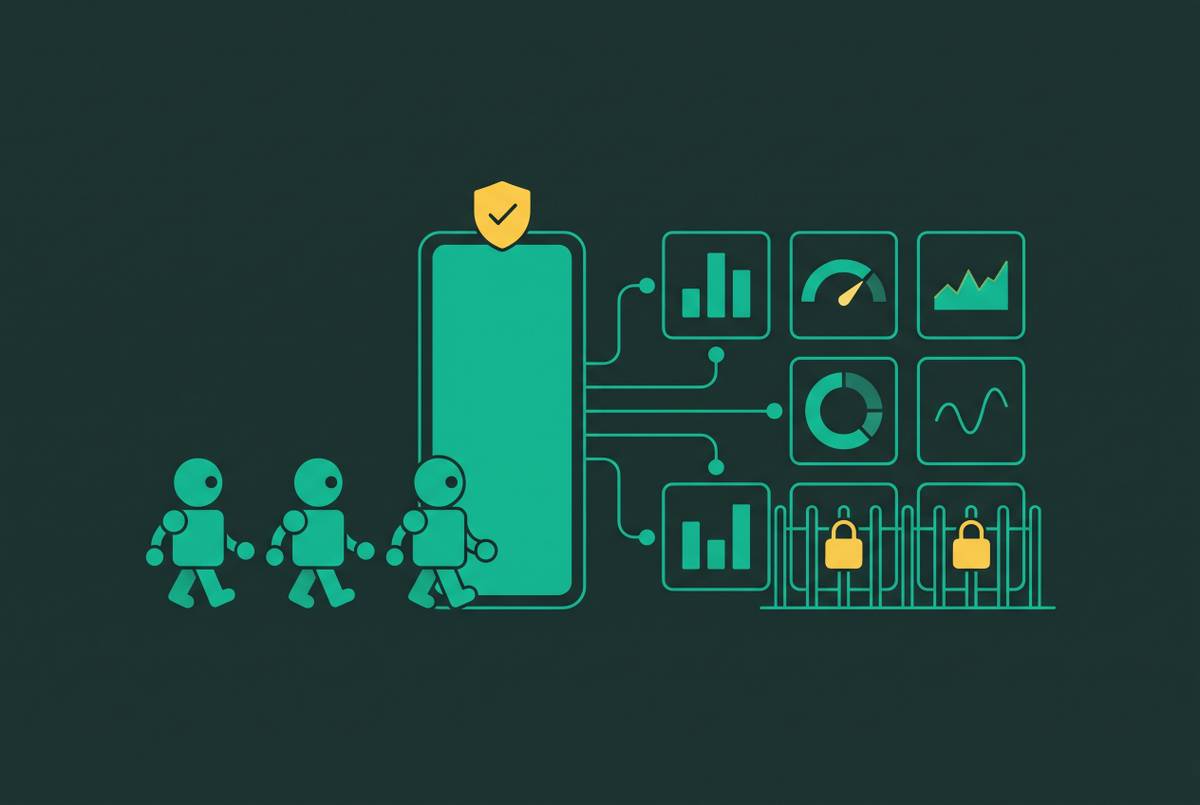
Governed metrics served over APIs and MCP keep agents off production.
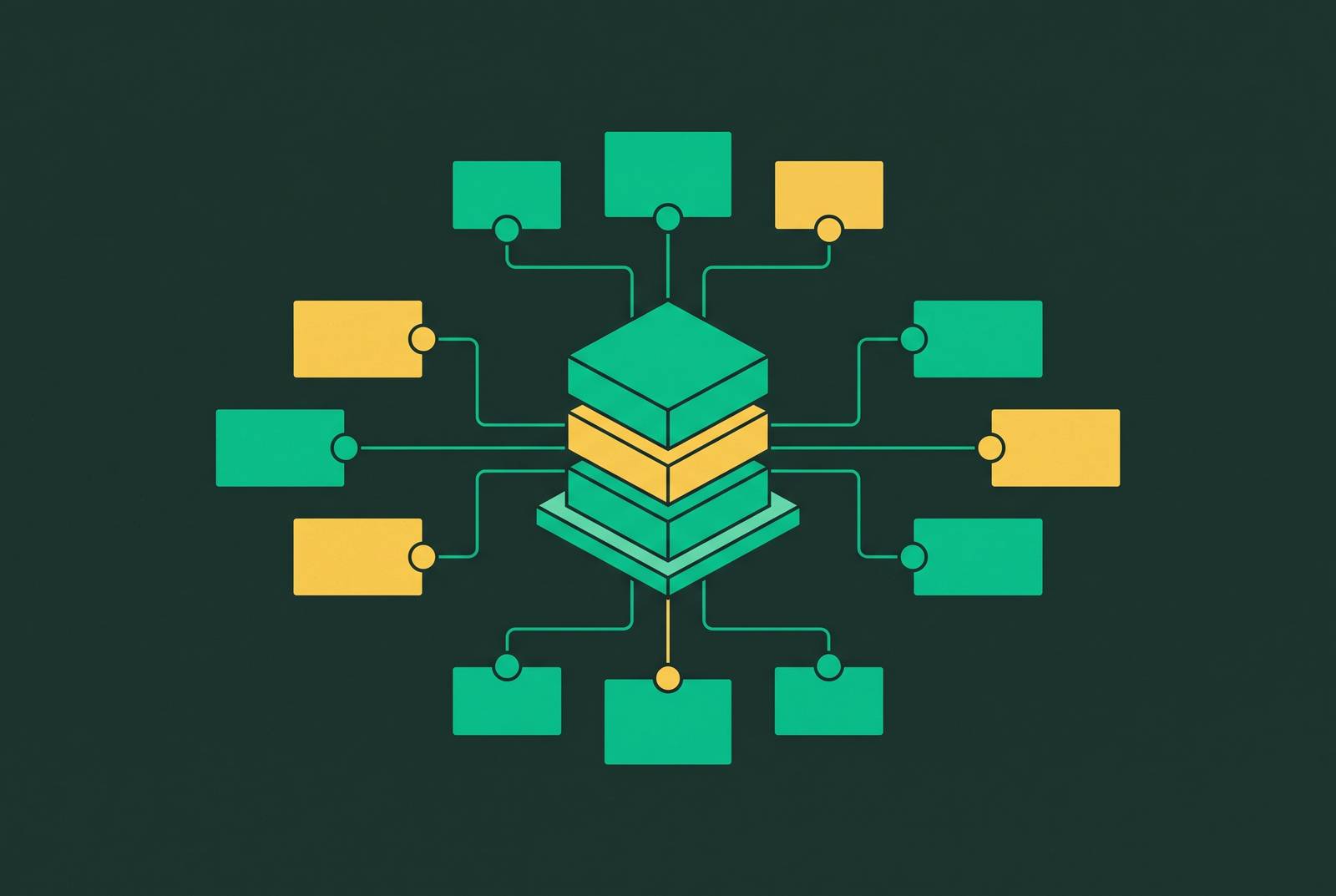
Headless analytics for Supabase teams means exposing governed metrics through APIs and MCP independently of any single frontend. For API-first and agent-first teams, the analytical backend can remain rooted in Postgres, with humans and agents consuming the same definitions through different interfaces. The essential separation is between production access, metric governance, and presentation.
Why the headless architecture pattern matters for data, not just websites
A headless CMS separates content management from the website that displays the content. Editors manage it once, and different frontends fetch it without having to manage how it is structured. Headless analytics separates data and calculations from the interface in the same way. A metric belongs to the data layer rather than to the dashboard, report, or application that presents it.
The load-bearing word is “headless,” because the data layer has no user interface of its own. Dashboards can still exist, but they are consumers rather than the place where the analytical logic must live. That distinction matters when the consumers include agents and pipelines as well as people. In this architecture, agents call APIs and invoke tools rather than navigating dashboards to retrieve numbers. Separating data from presentation is therefore more than a preference about how analytics should look.
Why MCP became the connective tissue that makes headless data practical
A standalone data layer still needs a standard way for agents to discover and call it. Anthropic open-sourced the Model Context Protocol in November 2024 to connect AI models to external tools, databases, and APIs without fragmented point-to-point integrations. MCP gives a headless service a callable interface that compatible agents can use. Its governance journey through an open-source foundation also signals that building on the protocol is not simply a bet on one vendor. The protocol provides the connection, while the service behind it remains responsible for what data it exposes.
Without a shared protocol, teams face bespoke connectors, custom authentication, hand-coded data quality checks, and governance policies built separately for each agent. Informatica's May 2026 announcement describes reusable data management capabilities that agents can invoke through a standardized protocol without custom integration code. For a Supabase team, the relevant consequence is narrower and practical. An agent in an MCP-compatible host can discover a governed data service and call it as an external tool, without a separate connector for each agent.
How Supabase teams are already in a better starting position than they realize
The usual warehouse assumption is that data must be taken out of an operational database before useful analytics can begin. For teams whose data already lives in Supabase, that assumption understates what Postgres can do. Postgres already supports analytical workloads, so adopting headless analytics does not inherently require moving the data into a separate warehouse. Extraction into another system can add overhead. The existing database can be extended safely without requiring a replacement system.
Postgres provides native building blocks for that extension, including materialized views, read replicas, and row-level security. Their value is not that they make unrestricted analytical access to production acceptable. Their value is that they support pre-calculation, workload separation, and controlled access within a Postgres-centered stack. Metrics can become governed datasets that agents and human interfaces query without going straight to the production database. Postgres then stops being only the application's store and becomes the foundation of a governed analytical endpoint.
Application tables hold the records a business creates, but those records alone do not define the metrics everyone will use. The work is to turn operational data into stable analytical outputs and expose those outputs through a controlled interface. A new warehouse is not a prerequisite for that work. A clear boundary between application operations and analytical consumption is.
Why AI agents fail when they reach directly into production databases
Direct production access removes that boundary just as the number of queries becomes harder to predict. Informatica's announcement says enterprise AI agents fail in part because they lack data they can trust. Unrestricted database access does not solve that problem, because access to raw records is not the same as access to reliable analytical context. Instead, an agent can act on whatever it finds at machine speed. A malformed query and a repeating execution loop can consume resources before an engineer notices.
In Postgres, bursts of analytical queries can compete for the same connection pool that serves live users. Each connection consumes memory, so a burst of concurrent agent queries can threaten database availability. Poorly written queries can also trigger full table scans on unindexed columns, degrading performance by orders of magnitude at scale. Row-level security can also cause performance to drop sharply when a badly written policy runs against a large table. Agents that bypass or stress those policies at query time amplify the exposure.
These infrastructure failures persist even as the model becomes more capable. Analytical workloads need a governed layer that is not the production database. Postgres also provides an immediate limit through statement_timeout, configured at the session or global level. That setting puts a hard ceiling on an individual runaway query's execution time. It is a useful safeguard, but it does not replace the workload separation that keeps analytical traffic away from live application traffic.
How do Supabase teams give AI agents safe API access to analytics?
Safe access combines workload isolation, scoped identity, query-time authorization, and runtime observability. Read replicas separate analytical database queries from the production instance, keeping bursts of agent traffic away from live user queries. Database users set up for specific purposes then limit what each agent can reach. A support agent and a financial reporting agent should not share credentials, because separate identities allow attribution, audit investigation, and scope limitation when something goes wrong. Isolation controls where work runs, while identity controls who is doing it.
Row-level security returns only the records an agent is allowed to see, while column-level masking redacts sensitive fields even in permitted queries. A reporting agent can then see transaction amounts without seeing payment card numbers. Runtime observability addresses a different problem, because periodic audits cannot capture rapid autonomous activity as it happens. Teams need to track every data touchpoint, decision node, and API call an agent starts in real time.
Together, these controls support a governed service between agents and Postgres. The service exposes pre-modeled datasets through a single MCP server, with DuckDB providing a query path over those datasets. Dreambase implements this pattern with pre-calculated metrics stored as governed Parquet datasets and an MCP server as the agent entry point. It requires no ETL, schema changes, or new infrastructure.
What a governed metric layer does that a production query cannot
Safe access protects the application, but it does not settle what a number means. Two stakeholders can query the same underlying records and produce different figures because they use different definitions of the same KPI. An agent adds another place where a definition can be reconstructed for a single session. If that calculation never becomes part of a shared source of truth, the next answer can use different logic. The resulting disagreement is a metric governance problem even when every query executes successfully.
A governed semantic layer keeps a definition, source, and calculation for each metric. Revenue, churn, and ROAS are then defined once and applied across dashboards, reports, and AI answers. Consumers can check how a number was produced instead of treating a plausible answer as sufficient proof. This is the distinction between retrieving a governed metric and asking a model to invent its calculation during a conversation. Both can return a figure, but only the former starts from the team's agreed analytical meaning.
For Supabase teams, Postgres materialized views provide a natural home for pre-calculated metrics based on those definitions. An MCP server can expose the governed outputs without making each consuming agent responsible for reconstructing them. The materialized view and the protocol serve different purposes, because one embodies the calculation and the other makes its result accessible. Neither should be confused with the business decision about how the metric is defined. That decision belongs in the shared layer before the number reaches any dashboard or AI answer.
How AI agents and humans consume the same governed layer differently — and why that is the point
Once the definitions are shared, the interfaces can diverge without fragmenting the numbers. A human analyst can use a dashboard or request a report, while an agent invokes the same governed dataset through MCP. The dashboard does not need to become an agent interface, and the agent does not need a prebuilt dashboard UI to retrieve usage analytics. With full API control, teams can change the presentation and keep the same analytical contract.
Agents also differ from humans in when they consume the data. They can run continuously against the governed layer, watching metrics, flagging shifts, and decomposing variance without waiting for someone to open a dashboard. This lets teams send relevant metrics to where people work, so they need not rely only on checks that someone asks for. In an implementation such as Dreambase, the MCP server is the primary dataset interface, so compatible agents query governed data as they invoke other external tools, with no custom connectors required.
For a founder or small team without a dedicated data analyst, that changes the role of an AI analyst agent. The agent consumes analytical definitions that must already be established. Its output becomes useful in a board meeting or investor update when the revenue figure matches what the founder sees in the dashboard. The governed layer makes the answer usable outside the conversation by giving it a definition the rest of the business shares.
What a Supabase team needs in place before headless analytics is worth building toward
Headless analytics is an outcome of prepared data and agreed controls. Before touching infrastructure, list the decisions the business makes weekly and write a metric dictionary for the definitions that recur in management discussions. Assign an owner to each metric so responsibility for its meaning is explicit. These steps require time at no monetary cost. These steps also give the analytical interface a clear purpose by settling which questions matter before the data is exposed.
Data quality is the next prerequisite. AI reporting tools need clean historical data and a meaningful quality baseline before their outputs can be trusted. When a governed layer is built on dirty data, the data it returns is still dirty, however consistently agents fetch it. Before agents get access to the data layer, teams need at least database users set up for specific purposes, RLS policies checked for performance, and a configured statement_timeout in Postgres.
With those foundations in place, the practical starting point is a Postgres materialized view for each of the top five metrics, a read replica routing analytical traffic, and an MCP server exposing the views to authorized agents. This ties the team's first steps to decisions it already needs to make. For teams considering Dreambase, its relevant fit is extending an existing Supabase project with pre-calculated metrics, Parquet datasets queryable through DuckDB, and a single MCP server, without a warehouse, ETL, schema changes, or a data team. That implementation choice comes after the same foundations, because faster access is valuable only when the answers are worth trusting.