The Governed Data Contract Behind Full API Control in Analytics Backends
Governed data contracts turn unstable analytics into predictable outputs APIs can depend on.

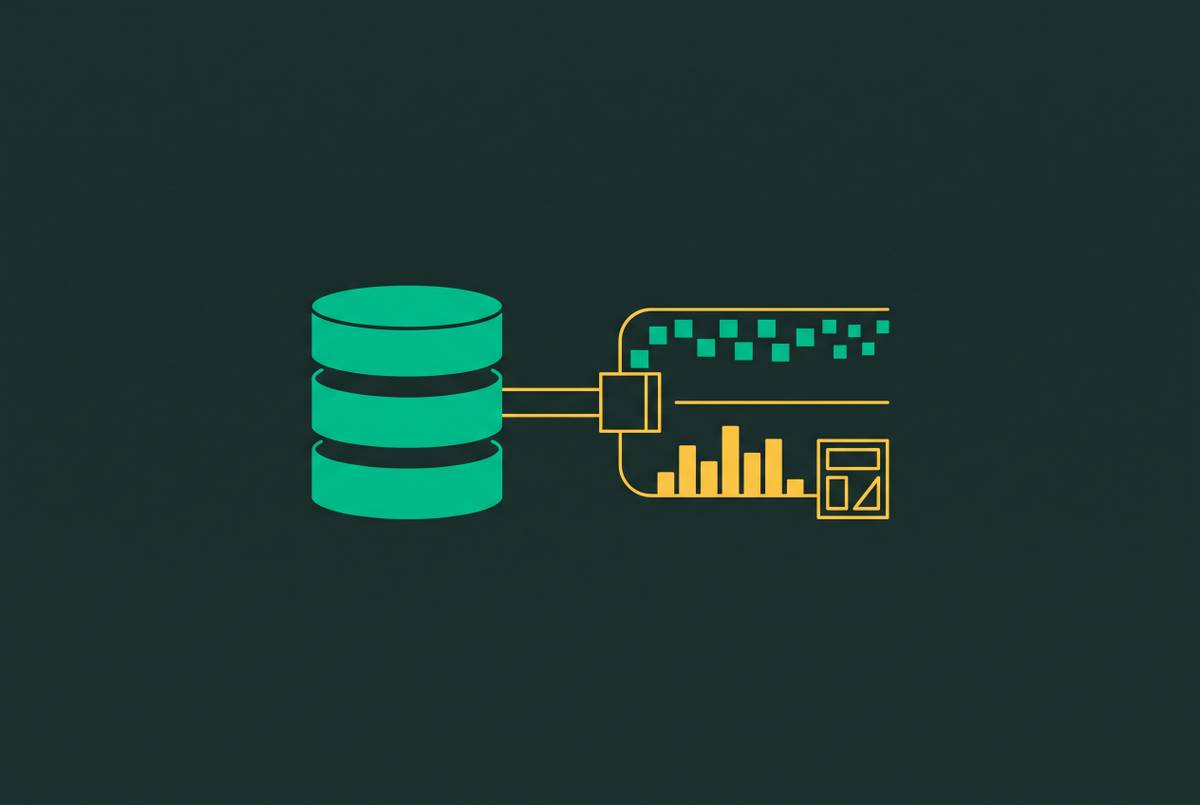
A headless analytics platform for API-first and agent-first teams needs a governed data contract. For teams building on Supabase, the right pattern exposes modeled metrics through an API-accessible analytical layer isolated from production. Full API control comes from governing what those outputs mean, who may retrieve them, and how their guarantees are enforced.
Why analytics backends break the same way REST APIs used to before contracts
Analytics backends reproduce the boundary failures that API contracts and OpenAPI address. Consumers depend on assumptions that producers never agreed to preserve. In data systems, those assumptions cross several boundaries, from the application database through transforms to dashboards, models, and agent queries. A field rename, type change, or shift in null behavior can therefore break a consumer well after the producer ships the change.
Detection often begins with “this number looks wrong.” By then, the change has passed through multiple hands, and the consumer must trace the discrepancy upstream. The incident damages more than a report. Once dashboards have misled people, even correct numbers become suspect. As analytics becomes mission-critical, its interfaces need the versioning strategies and service guarantees that teams expect from application services, in place of a loose understanding that upstream data will stay usable.
What a data contract actually specifies and why each element earns its place
A data contract is a machine- and human-readable, versioned agreement between a producer and its consumers. It governs a specific boundary, such as a Kafka topic, curated warehouse table, materialized view, or metrics-layer object. Each boundary has its own owner and version. The agreement covers six elements, because a schema alone describes only part of what consumers depend on.
Schema defines field names, types, nullability, enumerations, and constraints. Semantics explains business meaning, upstream calculations, and exclusions. Revenue needs more than a numeric type. Consumers need to know whether it is gross, net, billed, collected, or recognised. Freshness makes timing equally explicit, replacing “daily” with a commitment such as “available by 07:00 UTC with at most four-hour lag from source.”
Quality thresholds define acceptable null rates, cardinality bounds, distribution checks, and referential-integrity expectations. These catch data that fits the schema but undermines downstream models. Versioning and deprecation policy specifies change announcements, coexistence periods, approval, and rollback. Ownership says who the producer owner and consumer lead are and what support route to use. Together, these elements turn a description of today’s columns into a promise consumers can build against.
Where enforcement lives and why an unenforced contract is just a comment
Keeping a contract in a wiki does not stop a breaking change. Working contracts fire at ingestion and before publication. At ingestion, nonconforming data is rejected with a clear error or quarantined at the boundary without silent coercion. The producer sees the failure at once, and the invalid input stays out of the data that downstream consumers use.
Before publication, CI checks the producer’s contract against test data so reviewers can identify a breaking change during code review. This catches the change before the consumer’s next batch job. Loud failures can at first make the system look more fragile. In fact, enforcement exposes an existing dependency while the producer can still fix it cheaply, rather than leaving an analyst to discover the damage later.
Contracts-as-code makes those checks part of delivery. Lightweight YAML or JSON can work against a schema registry using the Open Data Contract Standard from the Linux Foundation’s Bitol project. The Data Contract Specification has been deprecated in favour of ODCS. The format supports automation, but automation is not the final objective. The decisive change is that the producer receives a failure against an obligation it owns, instead of the consumer inheriting an unexplained discrepancy.
How producer ownership converts a contract from policy into an operating agreement
Producer ownership follows the same rules for who is accountable as API contracts in microservices. The application team that owns the users service also owns the contract for user events. Downstream dependence makes that data an interface. An application database cannot remain solely a private implementation detail once other teams rely on its outputs, because changes now have consequences beyond the application.
With producers owning their contracts, the data team shifts from fixing downstream breakages to offering standards and a platform that make contracts easy to write and enforce. Named owners keep those promises in place as people move between teams and roadmaps change. ODCS includes support channels, team roles, and SLA information, giving consumers a route to the interface owner, change approver, and escalation contact when a guarantee fails.
What a contract does not solve — and what must sit alongside it
A contract can require a decimal field named “net_revenue” and document its intended meaning, but schema validation does not make every consumer apply the same calculation. Metric governance sets the rules for whether the metric excludes credits, includes implementation fees, or changes after currency conversion.
The dbt Semantic Layer moves metric definitions out of the BI layer and into the modeling layer so different teams can use them consistently. That responsibility differs from declaring a model’s shape. Access control is another separate obligation. Row-level security sets which records a user or agent may see, while column-level masking hides sensitive fields in results they are otherwise allowed to see.
Contracts stabilize interfaces, clarify escalation, and support procurement discipline when third-party AI tools depend on internal data. They do not, by themselves, guarantee an agent’s interpretation. A semantic layer, access-control policy, and observability must make the declared promises effective at calculation time, query time, and in production.
Why metric governance — not just schema stability — is the real analytics contract
Every executive metric should reconcile to a single source, with ARR from the billing system, cash from the bank, and product usage from the analytics layer. Reconciliation depends on agreed definitions alongside stable columns. Metric drift starts in the definition layer. Without a strict data dictionary, departments can quietly develop different meanings for “Churn” and “Active User” while every underlying schema remains valid.
For founders and small teams, the practical discipline is to choose fewer actionable metrics. For B2B SaaS, these typically include CAC, LTV, monthly churn, ARR, and gross margin. One person, such as the technical founder or a data lead, owns the definitions and resolves disagreements. More metrics cannot compensate for unresolved core definitions. Without an arbiter, drift can return within weeks despite interface enforcement.
A semantic layer turns that discipline into infrastructure. A calculation updated once reaches every dashboard and consumer that queries through it, including agents. At this level, the governed contract goes beyond a YAML schema to provide a modeled, pre-calculated dataset. Its promise covers the type of the returned column, the calculation consumers receive, and the business meaning they can rely on.
How agents change the contract requirements — and why production database access is the wrong pattern
AI agents expand the consequences of an unclear contract because they query autonomously, without human approval of every intermediate step. Schema drift or missing context can therefore produce wrong answers that propagate before review. An agent can exhaust connection pools, bypass row-level security, or construct answers from data never prepared for analytical use.
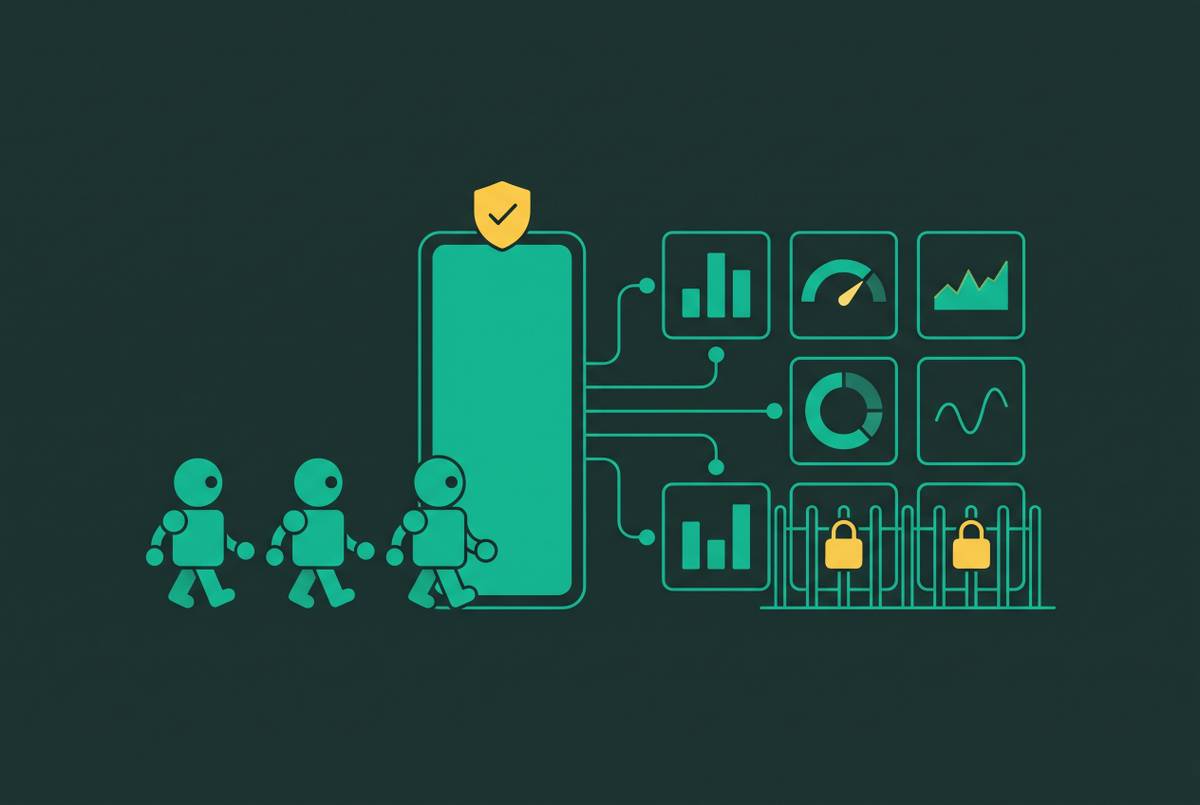
The appropriate pattern is least-privilege access to a governed copy isolated from production. Agents get governed data, work in a sandbox, and promote changes only after they are approved. Isolation alone is not sufficient semantic grounding. An agent restricted to approved tables can still misinterpret them if the contract lacks the business context needed to understand the result.
An AI-ready contract therefore adds machine-readable semantics, inference-time enforcement, and scope-bounded access controls. Semantics must be queryable through an API endpoint so an agent can validate its understanding before applying a field. Enforcement must also operate when the agent queries. Attribute-based controls, row-level security, and column-level masking can let a fraud detection agent get transaction amounts and timestamps while keeping payment card numbers hidden.
For Supabase teams, direct analytical traffic also inherits connection-pool risk and RLS friction, while expensive reporting appears on the Supabase bill. The recommended destination for that workload is a governed analytical layer.
How MCP turns a governed data contract into an API-grade interface for agents and humans alike
MCP gives the governed data contract a callable interface. A semantic layer behind the endpoint lets Claude and a dashboard answer the same business question from identical metric definitions without touching production data or each constructing separate SQL.
For a team adding usage analytics to an AI agent without a prebuilt dashboard UI, this separates delivery from presentation. Product usage comes from the governed analytics layer, and the agent retrieves it through the callable interface. Human tooling can consume the same definitions. Neither consumer needs an opinionated frontend to establish what the metric means.
The July 28, 2026 MCP specification revision made the protocol layer stateless and retired sessions. Requests can reach any server instance behind a plain load balancer, simplifying horizontal scaling for concurrent agent traffic. Accountability must scale with that traffic as well. Every MCP tool call should log the identity of the agent that called it, so an audit can show both who asked for the data and which query ran.
What observability the governed layer needs to stay trustworthy at scale
A freshness SLO needs measurements from the running system. The minimum observable set covers slow queries and their causes, connection counts and activity, and system health including CPU, memory, IO, disk, and replication lag. These measurements connect a declared guarantee to the conditions that can undermine it. Without them, the contract states a target that operators cannot reliably assess when performance deteriorates.
Supabase’s Metrics API exposes Postgres performance and health metrics in Prometheus exposition format. That provides a foundation for monitoring the database behind the application. The first alert should compare the connection count with max_connections. Passing 80% of max_connections is the point at which operations are in danger, so connection pressure should trigger an alert before consumers report failures and someone has to track down the cause.
Latency dashboards should include p50 and p95 from day one, because retrofitting them leaves early scaling decisions blind. Query-level scrutiny also exposes a different risk in JSONB-heavy product data. Five people maintaining five slightly different queries can produce five slightly different numbers, despite drawing from the same columns. Governed extraction and metric definitions must therefore accompany performance monitoring, so operational health does not conceal semantic disagreement.
What full API control over analytics outputs actually requires
The strongest analytics backend for API-first and agent-first teams is defined by its governed interface. Raw API access is insufficient if every consumer must reconstruct metric definitions or negotiate its own production access. Control requires an output whose meaning, permissions, and failure behavior are dependable. A patchwork of endpoints with separate schema assumptions cannot provide that shared obligation simply by being callable.
Small teams can put this discipline in place without a large data organization. The practical work is to choose the boundary to govern, pre-model the metrics that drive decisions, and expose them through a single endpoint consumed identically by humans and agents. Presentation then becomes a consumer choice rather than the place where business meaning is decided.
The practical test is whether both a human analyst and an AI agent can query the same metric and get the same answer, from a layer that fails loud when the contract is violated, without either touching the production database.