Data Sprawl Risks When AI Agents Access Multiple Sources
Uncoordinated agents build conflicting versions of your data.
AI agents have stopped being tools that answer a question when asked. They now reach into CRM systems, ERP platforms, databases, communication channels, and document repositories on their own, completing multi-step tasks without a human signing off at each stage. That shift, from passive query tool to active data consumer, is the starting point for understanding why data sprawl has become one of the defining risks of agentic AI deployment.
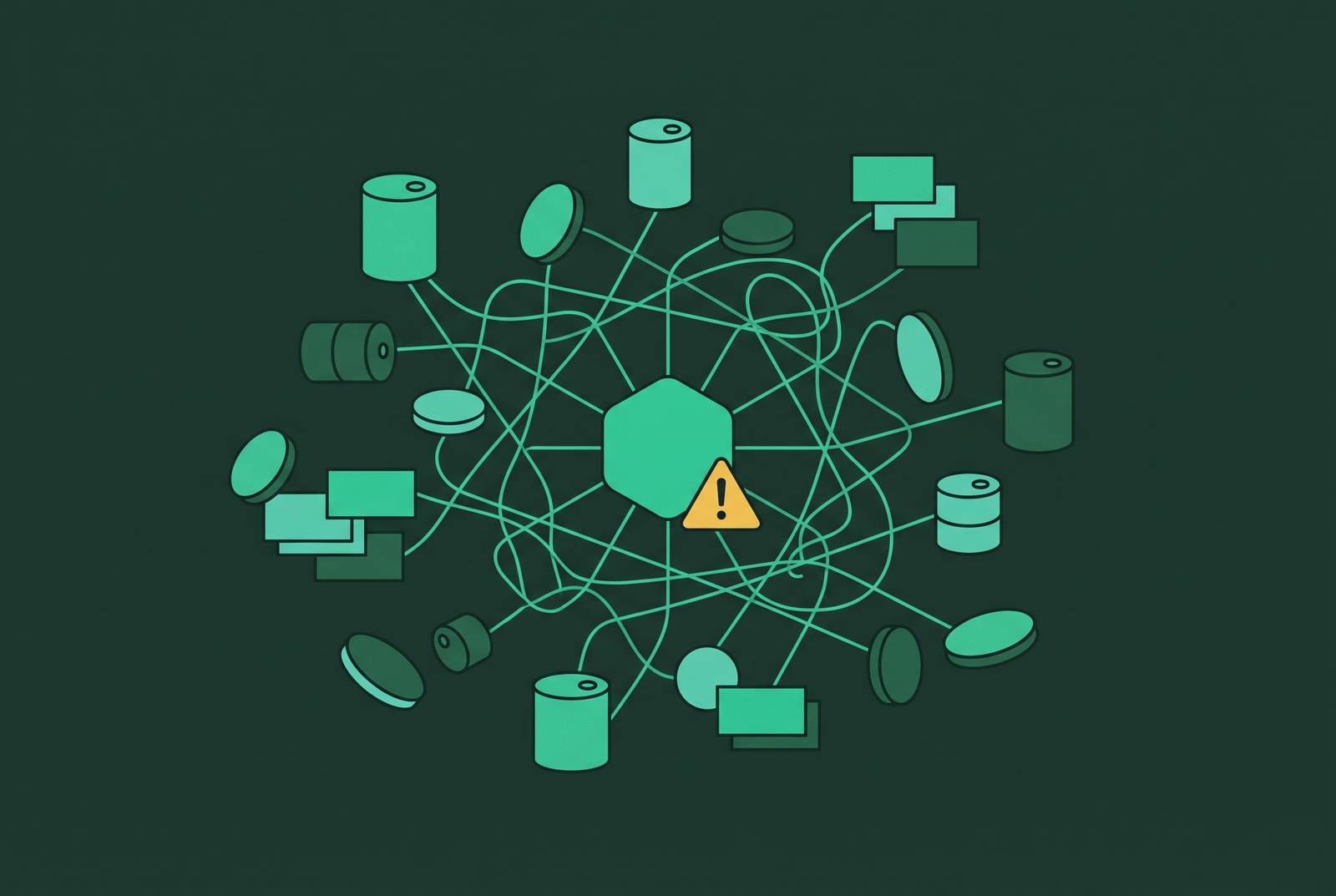
The scale of this shift is hard to overstate. Gartner predicts that by 2028, an average global Fortune 500 enterprise will have over 150,000 agents in use, up from fewer than 15 in 2025. And the way this growth happens makes it harder to govern, not easier: it isn't centrally planned or architected from above. A third spins one up against an internal HR system to handle routine employee queries. Each solves a real, local problem. None of them coordinates with the others.
Every one of those connections adds a new SaaS integration, a new API, a new path into company data. Agents built this way routinely touch customer records, financial data, and internal communications, often pulling from several SaaS sources within a single workflow to complete one task. An agent summarizing a sales pipeline might touch the CRM, a billing system, and a shared drive full of contracts in the course of answering a single prompt.
These agents don't just read the data and move on, they carry it forward, into a report, a recommendation, a Slack message, a decision passed to another agent downstream. Whatever version of the data an agent pulls becomes an input into something else. Data consumed by one agent doesn't stay contained to that agent's task; it carries forward into whatever that agent produces next. It propagates.
Fragmented source access corrupts the data, not just the security posture
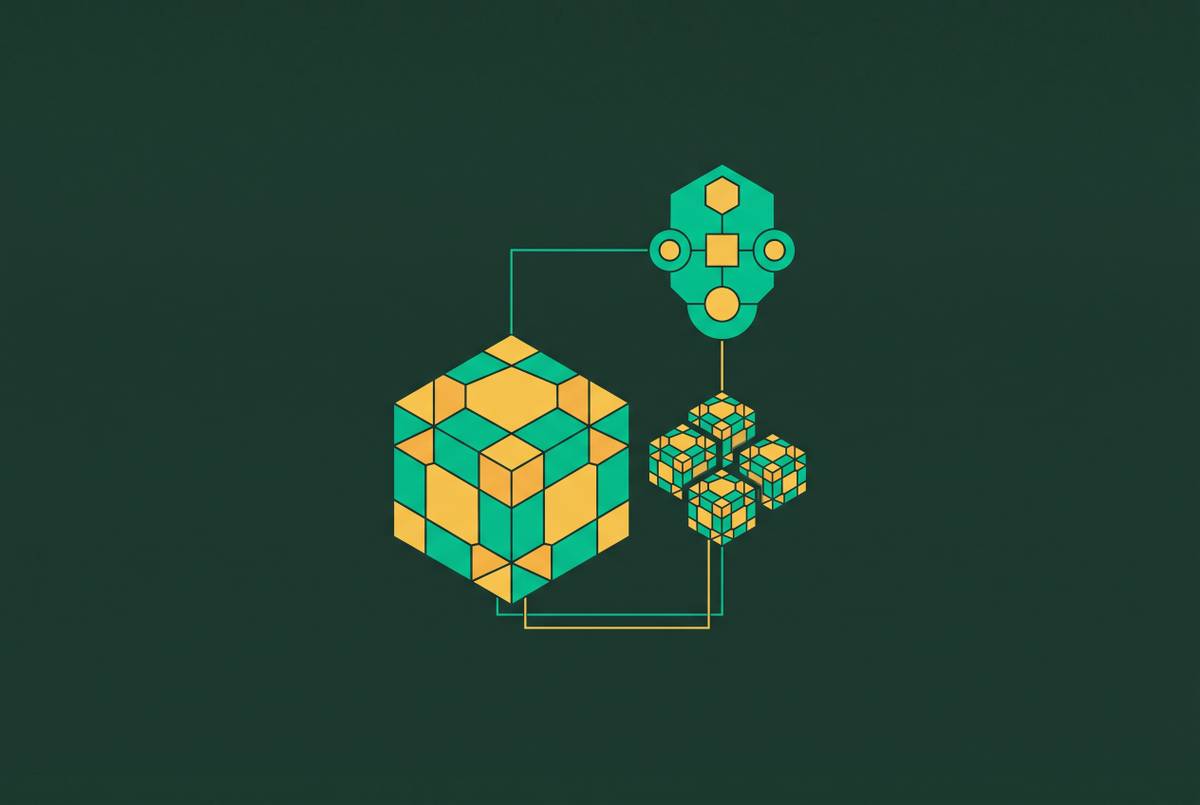
The deepest problem with letting agents connect to multiple sources independently is that each agent ends up building its own private version of the business, and none of those versions necessarily agree with each other, even though the security risks are also real. When five different agents each pull "revenue" from five different systems at five different moments, using five different transformation rules, you don't get five slightly different views of one number. You get five numbers, each one presented with total confidence, with no way for anyone (human or agent) to know which one is right.
Appian has identified this as the real driver of the cost of agent sprawl: agents inherit the same data silos and fragmentation that already plague enterprise systems, except now that fragmentation gets duplicated into separate, uncoordinated access logic for every single agent. Audit trails scatter across tools. A change to one upstream system ripples unpredictably through every agent connected to it, often without anyone noticing until the output looks wrong.
Picture three agents running at the same company on the same morning. One is drafting a board report and pulls revenue straight from the billing system. Three agents, three numbers, one metric that's supposed to mean one thing, and zero agreement between them. Each output lands with the same tone of certainty, because none of these agents has any way of knowing it might be wrong.
It's tempting to wave this off as the old "single source of truth" problem that enterprises have wrestled with for decades, just wearing a new AI costume. That framing misses what makes the agent version categorically worse. A human analyst who pulls a stale number might notice something looks off, or get corrected in a meeting before the number goes anywhere important. Errors don't get caught and corrected. They compound, silently, before anyone downstream has a chance to intervene.
The security risks that get most of the attention in this space, like credential exfiltration or an agent exploiting access it shouldn't have, are serious. But they're downstream of a more basic problem: the data itself can no longer be trusted as a shared reference point once enough agents are pulling from enough disconnected sources. That's the condition this piece is concerned with, and it's a condition that exists even in organizations that have reasonably good security hygiene.
Direct database access by agents turns a data quality problem into a production risk
Fragmentation becomes a concrete risk the moment an agent is handed a direct line into a production database. Once that happens, a problem about metrics not matching turns into a problem about systems breaking and permissions leaking.
Agents querying production tables directly compete with the live transactional workload that the database was built to serve. The agent sees exactly as much of the table as its credentials allow, which in practice is often far more than the task in front of it requires.
That overexposure is rarely intentional. Agents commonly inherit broad permissions through OAuth tokens, API keys, or borrowed user credentials, which lets them take actions well outside the scope of what they were built to do. If one agent in that chain gets compromised, whoever compromised it inherits every permission that agent was carrying.
This produces what security researchers call the confused-deputy pattern. Someone who can manipulate what that agent sees as input doesn't need to break into any of those three systems directly. They just need to steer the agent, and the agent will alter access controls or reset credentials on their behalf, using permissions it was granted in good faith.
When something does go wrong, the next problem is figuring out what actually happened, and this is where audits tend to fall apart. Plenty of agent-to-database connections leave no coherent trail, because nothing was designed to produce one.
A version of this risk is built into the platform's defaults for Supabase-backed applications. Supabase generates a REST API automatically, straight from the Postgres schema underneath it, so the moment an AI coding agent creates a new table outside the Supabase Dashboard, that table is reachable through the API unless Row Level Security has been turned on for it. Supabase is one instance of a pattern that appears anywhere a database auto-exposes its schema: convenience at the API layer becomes a governance gap the moment an agent is the one doing the querying.
What governed, centralized data access requires
None of this gets fixed by tightening security alone. The real fix requires that every agent, no matter what task it's running, pulls from the same pre-modeled, pre-certified version of the business, with one definition for every metric, enforced at a layer every agent must pass through rather than left up to whichever system the agent happens to be connected to.
Gartner's six-step framework for managing agent sprawl starts with establishing governance and policy, building a central inventory of every agent in use, and defining agent identity, permissions, and a lifecycle for retiring agents that are no longer needed. Every one of those steps assumes something that doesn't exist yet in most organizations: a canonical data layer that agents are routed through, rather than one they route around whenever it's inconvenient.
Least-privilege access, the standard security advice, helps but doesn't solve the underlying problem. An agent granted read-only access to a production table can still see an uncertified, untransformed slice of raw data, formatted however that table happens to be formatted that day. Limiting what an agent can touch is a permission boundary. It says nothing about whether what the agent can touch means what everyone assumes it means, which is a separate, semantic question that permissions alone can't answer.
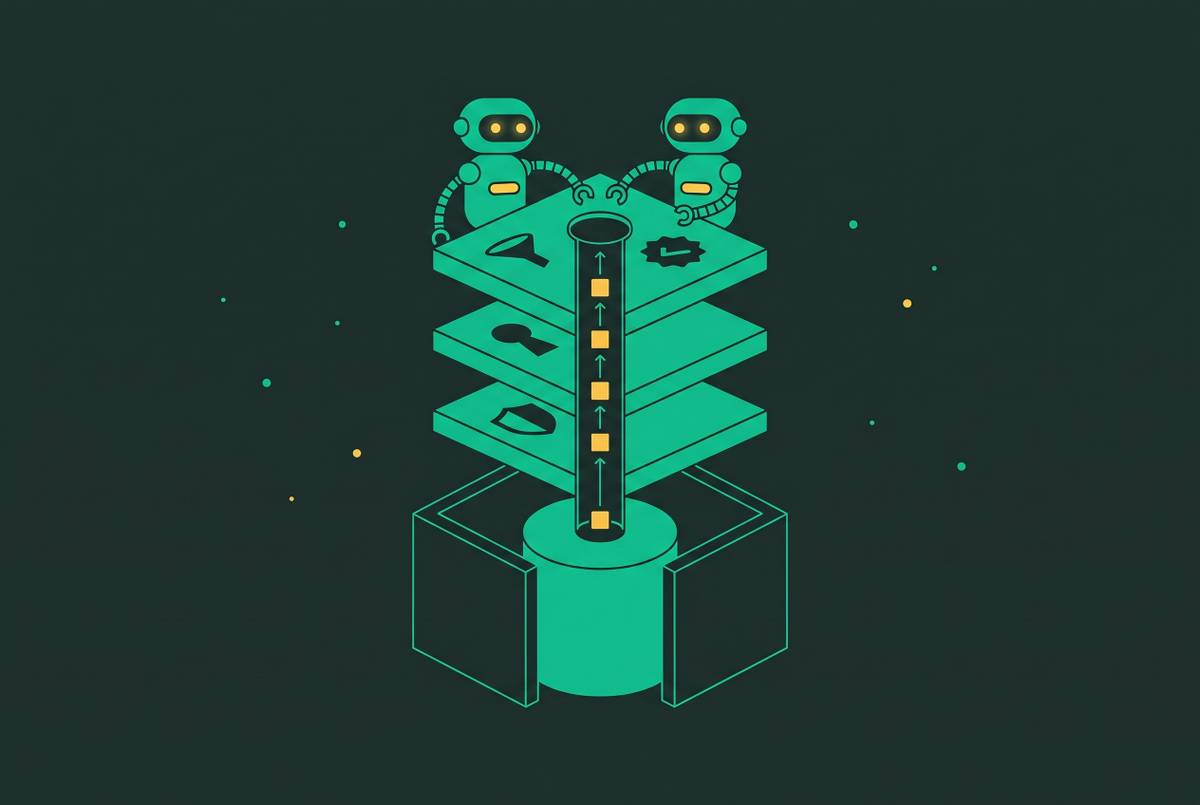
A governed data layer built for agents needs a specific set of properties to actually close that gap. Metrics need to be calculated once, ahead of time, rather than recomputed independently by whatever agent happens to be asking. Sensitive columns need to be masked so an agent only sees the fields relevant to its task, not everything the underlying table happens to contain. Row-level security needs to return only the records a given agent is actually authorized to see, rather than relying on the agent to self-limit its own query. And every query, from every agent, needs to land in one audit trail, not scattered across whichever logging each individual connection happened to produce.
Appian describes this as an operational context layer: the more agents an organization runs, the more essential it becomes that all of them draw on the same governed, consistent view of enterprise data.
The governed data layer must sit between agents and Postgres, not alongside it
A governed layer only solves fragmentation if every agent is actually routed through it, with no exceptions. A layer that agents can bypass whenever it's inconvenient, or one that sits next to direct production access as just another option, doesn't resolve the disagreement between agents. It adds a third, equally plausible, equally wrong version of the data to the two that already existed.
For teams running on Postgres and Supabase, the right move isn't to rip data out into a separate warehouse system that has to be kept in sync with production; it's to extend Postgres itself into a governed analytical layer, with datasets modeled ahead of time, queryable without ever touching the production tables directly, and every metric calculated once and shared across every consumer that needs it, whether that consumer is a person or an agent.
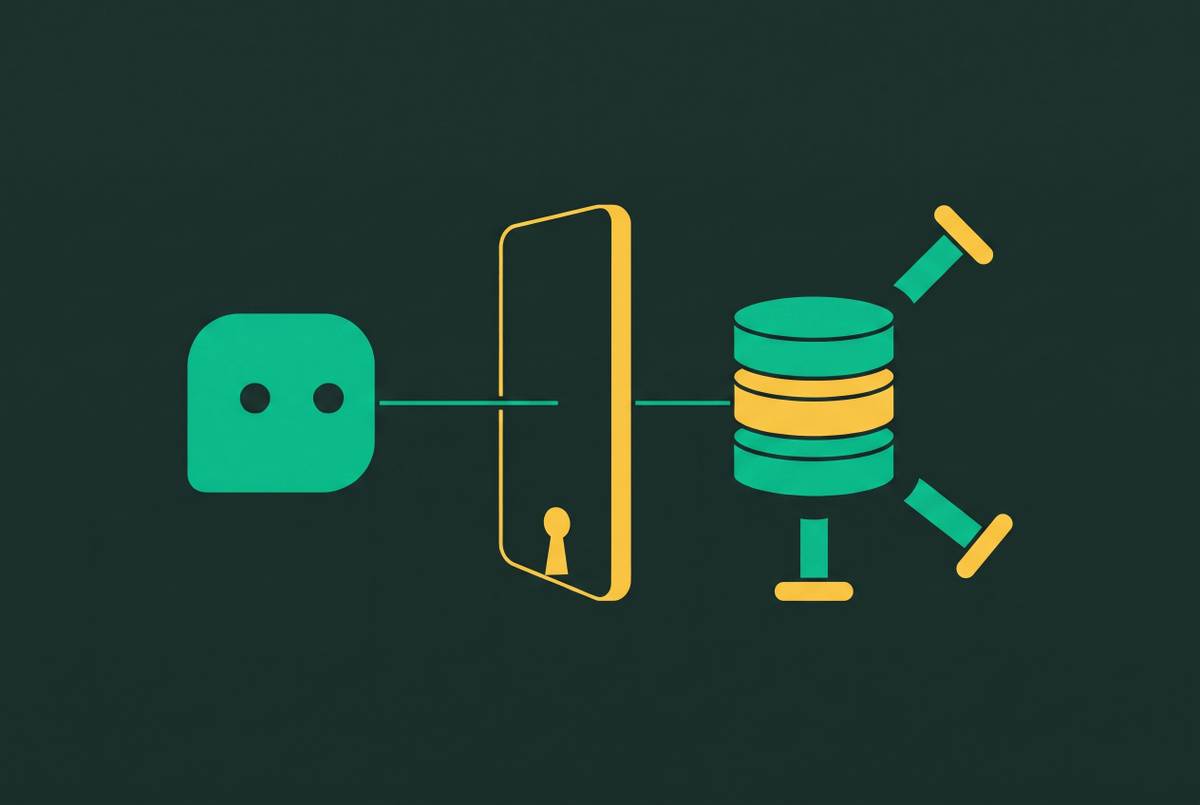
A standard integration protocol is what makes this kind of layer composable across a whole fleet of agents. An MCP server can expose pre-governed datasets to any agent without handing that agent direct production credentials; the MCP server handles authentication to the systems underneath it, though agents still have to authorize with the MCP server itself through OAuth. The practical effect is that agents get fast, accurate answers that are cheap to query, without the risk that a badly written query lands on a live transactional table and slows it down.
There's a caveat here that matters as much as the protocol itself. MCP moves data and the ability to take action closer to the agent, but it does nothing on its own to make that data correct. An agent connected through MCP to tables that were never certified or modeled will still produce confidently wrong answers, just faster and with a cleaner interface. A real semantic and governance layer needs to sit underneath MCP, not a raw, unmodeled schema wearing a protocol on top.
Dreambase is built around exactly this architecture. It functions as a governed data layer for teams running on Supabase and Postgres, calculating metrics ahead of time into Parquet datasets that get queried through DuckDB, with everything exposed through a single MCP server. Agents connected this way never touch the production database directly, and every agent, regardless of which team built it or what task it's running, works from the same certified version of every metric. That's the structural answer to the fragmentation described earlier: not better security around each individual connection, but one governed layer that every connection has to pass through.
Stopping data fragmentation on Supabase
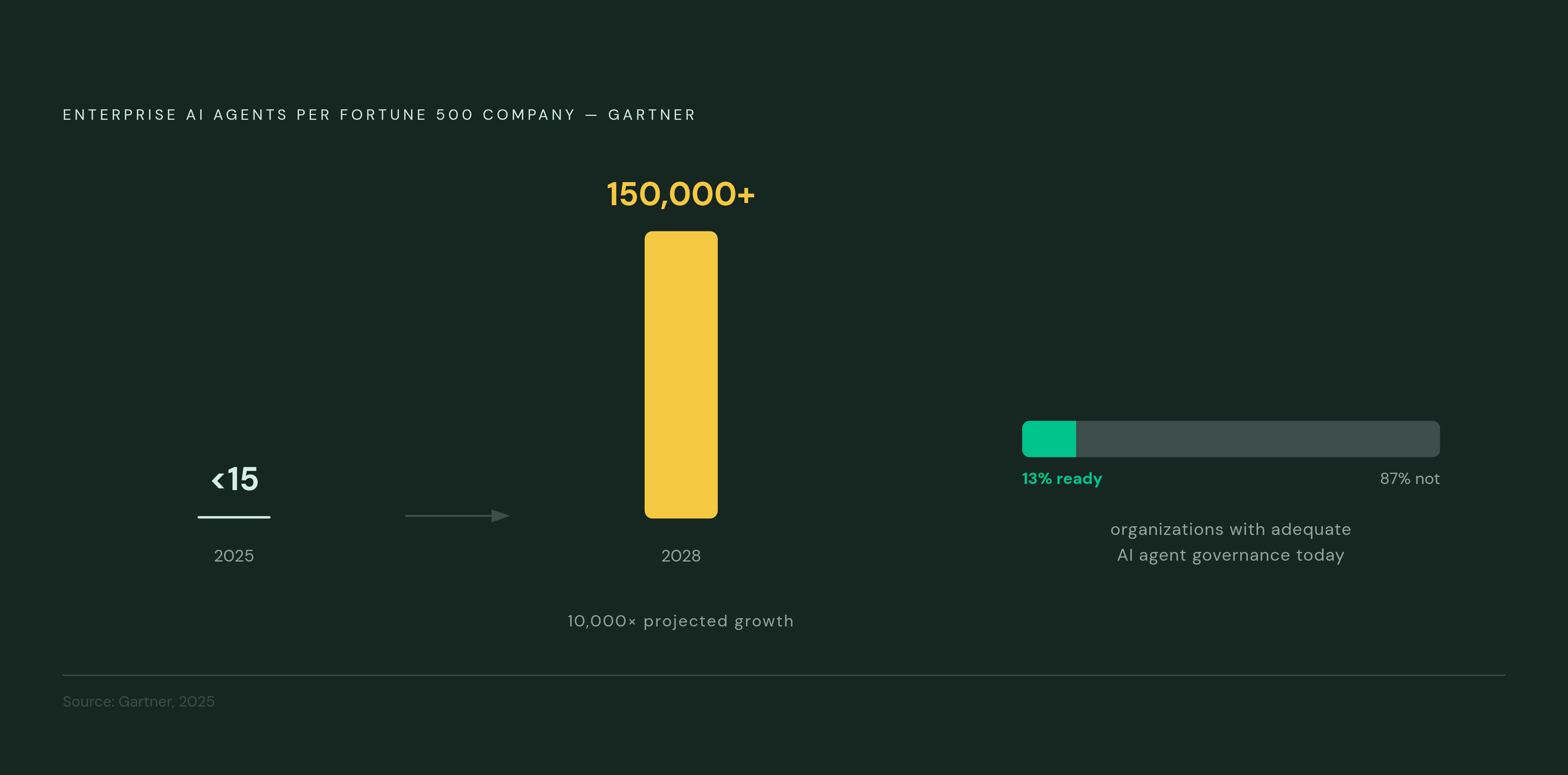
Enforcing a single source of truth is impossible across agents an organization doesn't even know exist, and that gap is wider than most teams assume. Gartner finds that only 13% of organizations believe they have the right AI agent governance in place today. The first real step, before any architecture changes, is a plain inventory: every agent currently running, every system it connects to, and which systems each agent treats as the authoritative source for which metric. The point of that audit is to find every place where two agents could plausibly answer the same question differently, because those are the places where trust in the data starts to break down.
As agent sprawl accelerates and each new agent brings its own independent set of integrations, the coordination burden only gets heavier. Dreambase addresses that burden by acting as one shared data layer that human teams and AI agents query at the same time, so agents never need to reach across multiple source systems on their own and every one of them works from the same governed datasets.
For any team running a Supabase project, a handful of concrete changes close most of the exposure described earlier. Row Level Security should be turned on for every table before an agent is ever connected to it, not after an incident reveals the gap. Analytical queries, the kind agents run constantly, belong on a read replica or a pre-modeled layer, never on the transactional database that the live application depends on.
Where agents pull the same metric from different systems using different transformation logic, each one ends up operating on its own version of reality, invisible to the others. Dreambase addresses that specific failure by pre-modeling metrics into governed datasets that every agent queries through one MCP server, so every agent and every person looking at the numbers is looking at the same thing.
Credentials matter as much as the queries themselves. Short-lived, narrowly scoped credentials, issued per task rather than once and forgotten, keep that liability from compounding as agent count climbs toward the numbers Gartner is forecasting.
Direct agent-to-database connections carry governance risk that no amount of logging after the fact can fully undo. A governed analytics layer, Dreambase among the options available to teams on Supabase and Postgres, lets agents work from pre-calculated, modeled metrics without ever reaching the production database directly, which removes both the performance risk of agents competing with live application traffic and the audit collapse that comes from scattered, incomplete logs. One governed data layer sitting between agents and raw data is the condition that has to be true before any AI agent's output can be trusted to inform a real decision, not a convenience feature bolted on for tidiness.